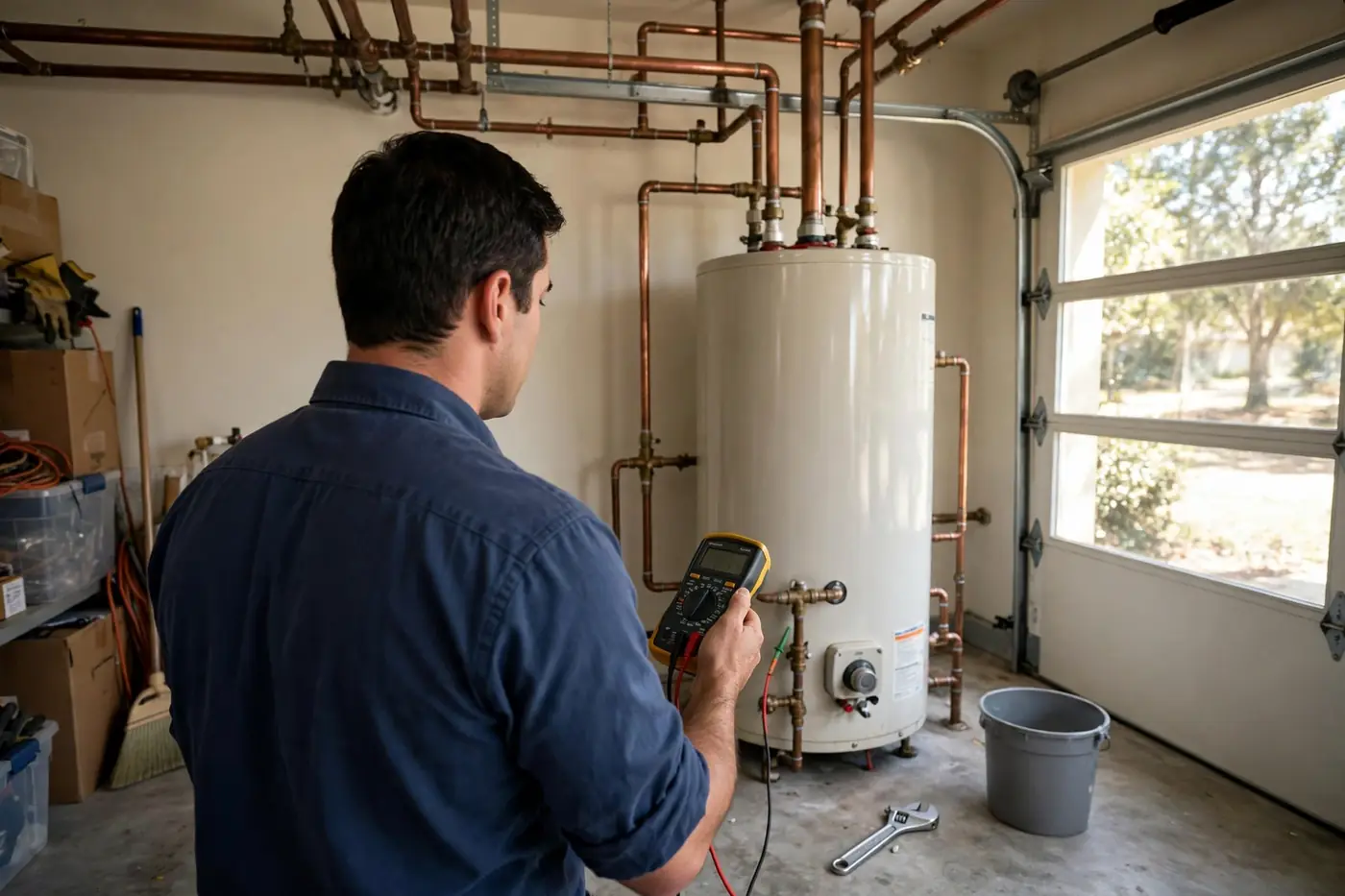
Plumber testing a tank water heater with a multimeter in a Seagoville home garage
Seagoville, Texas · ZIP 75159

Emergency Water Heater Repair in Seagoville, TX

A water heater emergency is water where it should not be, no hot water when you need it, or a smell of gas near the heater. In Seagoville, the most urgent call is a leaking tank, because a tank that leaks in a garage spreads across the floor, and a tank that leaks in an attic soaks the ceiling below before anyone notices. Call (833) 382-2711 as soon as you find the problem, and act first if water is spreading or you smell gas.

Call (833) 382-2711 Water leaking now? Shut off the water to the heater if you can reach the valve safely, then call.

Open Mon-Fri, 7am-6pm

  • Leaking tank, no hot water or gas smell: call as soon as you find it
  • Shutoffs first, then the call: water off, power or gas off where safe
  • Diagnosis on the call, repair or replacement decided on site

Water heater emergency in Seagoville: the quick answer

Call (833) 382-2711 for emergency water heater repair anywhere in Seagoville, TX, ZIP code 75159. If water is leaking, shut off the water to the heater if you can reach the valve safely, then call. If you smell gas, leave the home and call your gas utility's emergency line from outside. Calls are answered Mon-Fri, 7am-6pm, and urgent jobs are handled first during those hours.

Not every failure is an emergency. A heater that heats slowly can wait for a planned visit, while a leaking tank cannot. The table below sorts the common situations, and the water heater repair page covers the faults that are not urgent.

Sort it in seconds

What counts as a water heater emergency?

Most people find the problem first and wonder second whether it can wait. This table sorts the common situations by what to do first and how fast to call. The rule is simple: water spreading, gas smell, or no hot water at all cannot wait, while a heater that works but sounds different usually can.

SituationDo this firstThen
Water pooling around the heaterShut off the water to the heater if you can reach the valve safelyCall: a tank-body leak means replacement
Water dripping from a fitting or valvePut a bucket under it and note where it startsCall: a fitting leak is usually repairable
No hot water at allCheck the breaker on an electric heater, or the pilot on a gas heaterCall: the cause is usually clear in minutes
Smell of gas near the heaterLeave the home and call your gas utility's emergency line from outsideDo not relight the pilot or switch lights on or off
Breaker keeps trippingLeave it off and do not keep resetting itCall: a failing element or a wiring fault is behind it
Stain on a ceiling below the atticCheck the attic for a drip and shut off the water if it is safe to reachCall: attic leaks spread through ceilings fast
Rumbling or popping noisesNote when it started and whether hot water has droppedCall soon: sediment is boiling in the tank
Before you call

What to do right now, in order

These are the safe steps, and they take a minute. The shutoff valve is the fastest help there is when water is spreading, faster than any phone call, so it comes first.

Stop the water

Find the shutoff valve on the cold water line into the heater and turn it clockwise. If the valve is stiff from hard water scale, do not force it: move towels and a bucket to the leak instead, and say so on the call. A drain pan under the heater catches slow leaks that a floor drain never sees.

Cut the heat source

On an electric heater, switch the breaker off. On a gas heater, turn the gas control knob to off if you can reach it safely. A heater that keeps heating with little or no water inside can be damaged, and a leaking heater does not need to keep running while you wait.

If you smell gas, leave

Do not relight a pilot, do not switch lights on or off, and do not use a phone inside the home. Leave, then call your gas utility's emergency line from outside. A gas smell is the one situation where the call to the utility comes before any call about the heater.

Safety first: if water is spreading through a ceiling or across a floor, the shutoff valve is the help that matters most. Once the water is stopped, the call decides the rest: repair or replacement, and what happens next. If you smell gas, leave the home and call your gas utility's emergency line from outside.

Simple by design

What happens when you call

There are no forms on this site to fill in. Calling is the whole process, and a leaking tank is handled first during the hours calls are answered, Mon-Fri, 7am-6pm.

Describe what you found

Call (833) 382-2711 and say what the heater is doing: leaking, no hot water, gas smell, tripping breaker, or a noise that was not there yesterday. Add the heater type, gas or electric, its age if you know it, and where it sits: garage, attic or closet.

The likely cause is named

Most emergency symptoms point to a short list of causes, and the likely one is usually clear within minutes. A leak from the tank body means replacement; a leak from a fitting usually means repair; no hot water on a gas heater usually means the pilot or the thermocouple.

The visit is planned around the urgency

A leaking tank is handled first. The visit starts with the diagnosis, the fault is explained before any work is agreed, and a like-for-like tank replacement is usually finished in a single visit. A permit and inspection are typically required in Seagoville, and your plumber pulls the permit.

The Seagoville pattern

The emergencies seen most in Seagoville

Texas homes commonly put water heaters in attics and garages, and a leak in either place does its damage quietly. An attic leak spreads through insulation and ceiling drywall, and the first sign is often a stain on a ceiling below, by which time the leak has been running for a while. A garage leak spreads across the floor and into whatever is stored there. In both places, the shutoff valve is the fastest help, and a drain pan under the heater catches the slow leaks.

Age decides how a leak ends. A tank that leaks from its body has corroded through, and it cannot be patched at any age. A tank that leaks from a fitting, a valve or a connection can usually be repaired. That is why the first question on the call is always where the water is coming from, and why it helps to dry the floor and watch where the water returns before you call.

No hot water, and freeze damage at the thaw

A heater that gives no hot water at all is the most common urgent call that is not a leak. On a gas heater the pilot or the thermocouple is the usual cause; on an electric heater it is a tripped breaker or a failed element. After a hard freeze the cause is different: splits in pipes and fittings show at the thaw, not during the freeze.

In February 2021, Winter Storm Uri held the Dallas-Fort Worth area at or below freezing for 139 consecutive hours, and freezing pipes were the top cause of property damage in the more than 500,000 insurance claims filed statewide. Check the attic and garage for drips after a freeze, before the heater fires back up. Exposed pipes in attics and garages, and heaters in unheated spaces, are what fail first.

Freeze protection for Seagoville homes →
The Seagoville root cause

Why Seagoville heaters fail the way they do

Seagoville tap water measures about 9.5 grains per gallon, firmly in the hard band. Sediment settles at the bottom of the tank, scale coats the elements and burners, and the anode rod is used up faster than it would be in soft water. A tank that should last 8 to 12 years can fail in about 6 years if it is never serviced in hard water, and the failure often arrives as a leak with no warning.

An emergency visit fixes the fault in front of you. A flush and an anode rod check fix the cause behind it, which is why the visit usually includes a look at both. Annual flushing adds roughly 2 to 4 years to a tank's life, and it is the single most useful habit for a Seagoville heater.

Seagoville hard water and your heater →

What to have ready on the call

Your address in 75159, the type and size of the current heater, its fuel type, where it sits in the home, and what you found: where the water is coming from, or whether the pilot is lit. That is enough to name the likely cause and plan the visit on a single call.

Call (833) 382-2711
Local, and only local

Emergency repair across Seagoville

Emergency calls cover every part of Seagoville in ZIP code 75159. The older streets around Malloy Bridge Road, Seagoville Road and Kaufman Street carry original heaters that are now 15 to 25 years old, while the newer subdivisions in the north are reaching the age where warranty-expiry faults and first sediment problems start. Either way, one call covers it.

  • Seagoville Farms
  • Edmonds Ranch
  • Stonehaven
  • Cottonwood Creek
  • Santorini
  • Tredway Estates
  • Malloy Bridge Road area
  • Seagoville Road area
  • Kaufman Street area
  • US-175 frontage

See the full breakdown on the Seagoville service area page.

Keep looking

Related water heater services in Seagoville

Not the page you need? These services sit closest to this one, and the hub lists all ten.

Water Heater Repair

No hot water, a leaking tank, a pilot light that will not stay lit, rumbling noises or rusty water. Diagnosis first, then the fix.

Water Heater Repair in Seagoville

No Hot Water

Nothing but cold from every tap. The usual causes on a gas heater and an electric heater are different, and a few checks tell them apart.

No Hot Water in Seagoville
Questions

Emergency water heater repair in Seagoville: frequently asked questions

What counts as a water heater emergency in Seagoville?

A leaking tank, a smell of gas near the heater, no hot water at all, a breaker that keeps tripping, or a stain on a ceiling below an attic heater. Water spreading through a floor or a ceiling is the most urgent of these, because the damage grows while you wait. A heater that heats slowly, or makes a noise that is new but gives no other symptom, can usually wait for a planned visit.

My water heater is leaking. What should I do first?

Shut off the water to the heater if you can reach the valve safely, then call (833) 382-2711. The shutoff valve sits on the cold water line into the top of the heater: turn it clockwise to close it. Put towels or a bucket where the water is spreading, and note where the leak starts, a fitting or a valve is usually repairable, while a leak from the tank body itself means the heater needs replacing.

I smell gas near my water heater. What do I do?

Leave the home and call your gas utility's emergency line from outside. Do not relight a pilot, do not switch lights on or off, and do not use a phone inside the home. A gas smell is the one situation where the call to the gas utility comes before any call about the heater, and the heater is only looked at once the utility says it is safe.

Can an emergency water heater repair be finished in one visit?

Many emergency jobs are finished in a single visit, once the fault is diagnosed. A part replacement on an accessible heater is usually quick, and a like-for-like tank replacement is usually finished in a single visit too. A repair that needs a part ordered in, or a heater in a difficult attic space, takes longer. A permit and inspection are typically required for a replacement in Seagoville, and your plumber pulls the permit.

My water heater stopped heating but is not leaking. Is that an emergency?

It is urgent, and it is usually a quick diagnosis. On a gas heater, the pilot light or the thermocouple is the usual cause. On an electric heater, it is a tripped breaker, a failed heating element or a faulty thermostat. Check the breaker panel first on an electric heater, and check whether the pilot is lit on a gas heater. If the heater is leaking as well, shut off the water first and call.

What hours do you answer emergency calls in Seagoville?

Calls are answered Mon-Fri, 7am-6pm, and urgent jobs are handled first during those hours. Outside those hours, the advice on this page still applies: shut off the water to a leaking heater if you can reach the valve safely, switch off the breaker on an electric heater that keeps tripping, and if you smell gas, leave the home and call your gas utility's emergency line from outside.

Water leaking, no hot water, or a smell of gas?

Act first, then call: shut the water off, then describe what you found

One call, one diagnosis, and a straight answer on whether the heater can be repaired or needs replacing.

Call (833) 382-2711
Call (833) 382-2711
Call (833) 382-2711