

How Long Does Water Heater Installation Take in Seagoville, TX
The short version: a straight tank-for-tank swap in Seagoville is usually done in a single visit, often within a few hours. The longer jobs are the ones that change something, a switch to tankless, a change of fuel, or a heater moved to a different spot. This guide breaks down what each type of install takes, what slows a job down in Seagoville homes, and how the permit step fits into the calendar.
Open Mon-Fri, 7am-6pm
- Like-for-like tank swap: usually a single visit
- Tankless and fuel changes: plan for a full day
- The permit step adds days to the calendar, not hours to the visit
The quick answer
A like-for-like tank replacement in Seagoville is usually finished in a single visit, often within a few hours. A tankless install, a fuel change from electric to gas or the reverse, or a heater moved to a new location takes longer because of venting, gas line or electrical work, and the permit inspection that follows. If you are planning a new install, start with water heater installation in Seagoville and call (833) 382-2711 to confirm the timing for your home.
How long each type of install takes
There is no single answer, because the job changes with what is being installed. The table below covers the jobs seen most in Seagoville homes, from a straight swap to a full conversion.
| Type of install | Typical timing |
|---|---|
| Like-for-like tank replacement | A single visit, often a few hours |
| Tank to tankless conversion | Most of a day |
| Fuel change, electric to gas or gas to electric | A full day or more |
| Heater moved to a new location | Longer, sometimes across visits |
| Commercial install | Varies with size and peak demand |
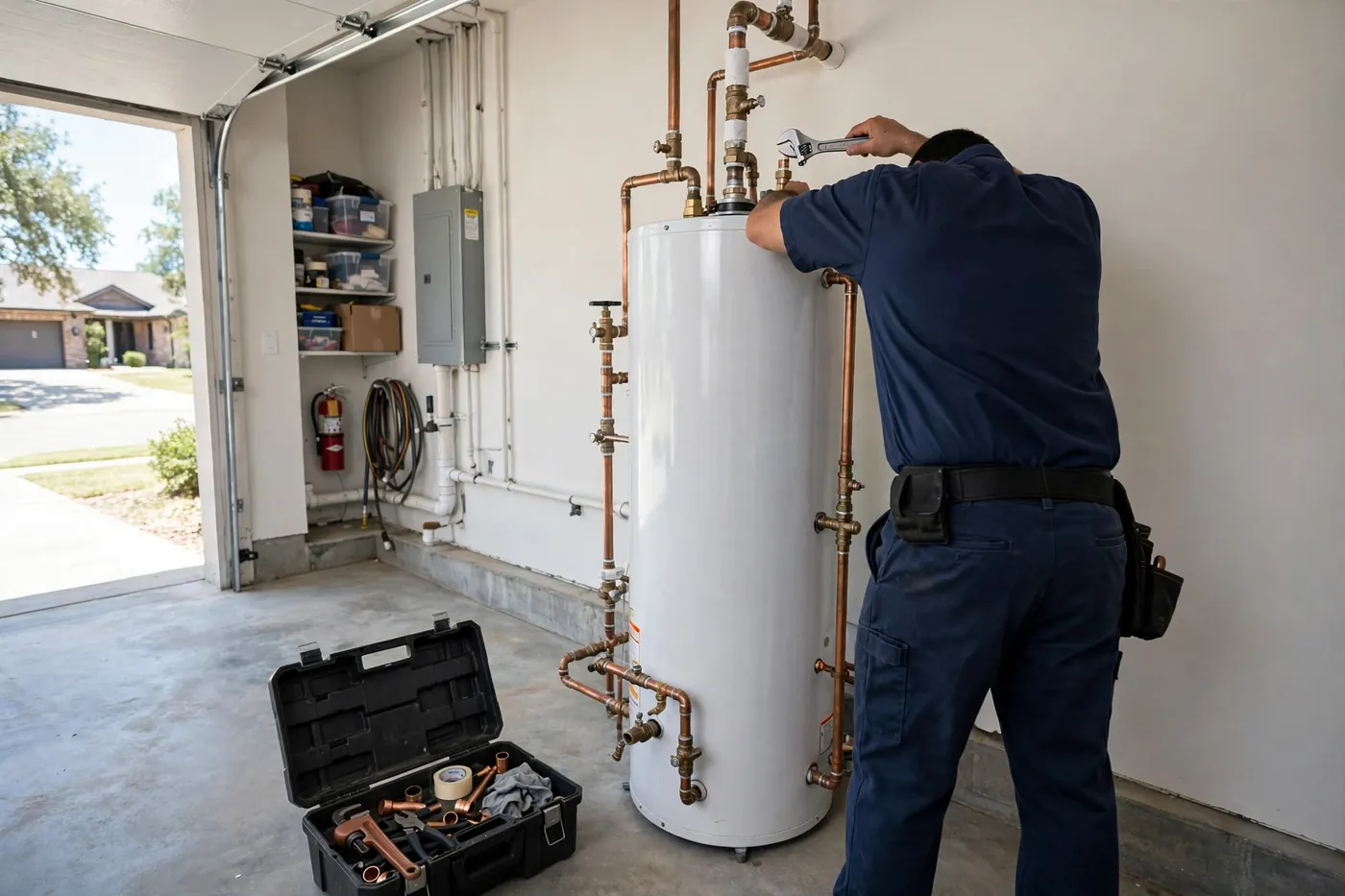
A like-for-like swap is fast because everything already fits: the connections, the venting and the space were built for a heater just like the one going in. The job is drain, remove, set, connect and test. A conversion is a different job. A tankless unit mounts on the wall, needs its own venting, and usually needs a larger gas line or upgraded electrical work. A fuel change adds the same kind of work in reverse: a gas install needs a gas line run to the heater, and an electric install needs panel capacity and dedicated circuits. Moving a heater to a new spot means new water lines, new venting or wiring, and sometimes a new drain pan and platform. That is why the timing question always starts with what you have now and what you want to end up with.
What makes an install take longer in Seagoville
Three things about this city show up in install timing again and again: the age of the housing, where heaters sit, and the water itself.
1990s homes bring 1990s plumbing
The median Seagoville home was built in 1990, which means a large share of the city is now on a second or third water heater. The plumbing around it is often original: shutoff valves that have corroded in place, venting sized for an older unit, a gas line too small for a tankless conversion, or an electrical panel with no spare capacity for a new circuit. None of these is a big job on its own, but each one adds time to the visit, and they are usually found once the old heater is out. A good call beforehand surfaces most of them: the age of the home, the current heater type and where it sits are usually enough to plan for what the visit will find.
Attics and garages are slow to work in
Texas homes commonly put water heaters in attics and garages, the two spots in the house that are hardest to reach and drain. An attic heater means carrying the old unit down and the new one up, working in a tight space, and draining a tank with no floor drain nearby. A garage heater is easier, but still needs clear access around it. If the heater has been leaking, the surrounding area needs checking before the new unit goes in, because water in an attic spreads into insulation and drywall fast.
Hard water slows the old tank down
Seagoville tap water measures about 9.5 grains per gallon, firmly in the hard band. A tank that has never been flushed builds up sediment at the bottom, and that sediment slows the drain when the old heater comes out. It is a small delay, not a day-long one, but it is one more reason the flushing schedule matters: a tank flushed once a year drains clean and comes out faster, and lasts roughly 2 to 4 years longer besides. For a new tankless unit, hard water means planning annual descaling from day one, or scale will block the heat exchanger.
The permit step adds days, not hours
One point confuses almost everyone planning an install: the permit and inspection add days to the overall calendar, not hours to the install visit. In Seagoville, a permit is typically required for a water heater replacement. The city has adopted the 2024 International Codes with city amendments and the 2023 National Electrical Code, contractors must register with the city before applying, and permits are issued through the city's OpenGov portal. The inspection is scheduled after the install, on 972-287-6829.
Your plumber pulls the permit and arranges the inspection, so there is nothing for you to file. The practical effect on timing is that a job booked on Monday may not be installed until the permit is in hand, even though the install itself takes a few hours. That is normal, and it is also why calling early matters: the permit clock starts when the job is booked, not when the installer arrives.
What to have ready when you call
Your address in 75159, the type and size of the current heater, its fuel type, and where it sits in the home. That is enough to plan the install and give a straight answer on timing.
Call (833) 382-2711What happens on install day
For a like-for-like swap, the visit follows the same order every time. Knowing the steps makes it easy to tell whether a job is on track.
Old heater out
The water and fuel are shut off, the tank is drained, and the old heater is disconnected and removed. Sediment in an unflushed tank makes the drain slower.
New unit set and connected
The new heater is set in place, connected to the water lines, gas line or electrical supply, and vented. Shutoffs and fittings that have corroded are replaced at this stage.
Fill, test and check
The tank is filled, the unit is fired up or powered on, and every connection is checked for leaks. Hot water is usually back before the installer leaves.
The inspection follows after the install, arranged by the plumber. If the job was a conversion or a relocation, the same steps apply, with the extra venting, gas or electrical work fitted in before the new unit is connected.
How to keep your install on schedule
Most delays are avoidable, and most of them are avoided on the phone call, not on the day.
- Clear access to the heater before the visit
- Know the current type, size and fuel
- Say where the heater sits: garage, attic or closet
- Mention leaks, noises or rusty water
- Book early so the permit is ready
Every home in Seagoville is covered, from the new subdivisions in the north to the older streets around Malloy Bridge Road. See the full picture on the Seagoville service area page, or browse all ten water heater services if the job is bigger than a swap.
How long does water heater installation take: frequently asked questions
How long does it take to replace a water heater in Seagoville?
A like-for-like tank replacement is usually finished in a single visit, often within a few hours. The old heater is drained and removed, the new unit is set, connected and tested, and hot water is usually back the same day. A tankless install, a fuel change or a heater moved to a new location takes longer.
Does a tankless water heater take longer to install than a tank?
Yes, usually. A tankless unit needs venting, often a larger gas line or upgraded electrical work, and a wall mount, where a tank swap reuses the existing connections. Most tankless installs still finish within a day, but plan for a full day rather than a few hours.
How long does the permit and inspection take in Seagoville?
The permit itself is filed through the city's OpenGov portal before the work starts, and the inspection is scheduled after the install on 972-287-6829. The permit step adds days to the overall calendar, not hours to the install visit. Your plumber pulls the permit and arranges the inspection.
Will I be without hot water overnight?
Usually not. A like-for-like replacement is normally done in one visit, so hot water is back the same day. If the job is bigger, a tankless conversion or a fuel change, the installer tells you on the call whether hot water will be back the same day.
What can slow down a water heater install in an older Seagoville home?
The median Seagoville home was built in 1990, so older installs often bring corroded shutoff valves, outdated venting, a gas line that needs upsizing for tankless, or an electrical panel with no room for a new circuit. Heaters in attics also take longer to reach and drain. The call usually surfaces these before the visit.
Can I speed up my water heater installation?
Clear access to the heater, know the current type, size and fuel before you call, and say where the heater sits, garage, attic or closet. That is usually enough to plan the visit so the right unit and parts arrive the first time.
Ready to book your install?
One call covers installation, replacement, repair, tankless or flushing anywhere in Seagoville, ZIP code 75159.
Call (833) 382-2711